

Debunking Common Myths in Autonomous Haulage
Autonomous haulage systems are transforming mines across the world, yet longstanding misconceptions still create hesitation for operations considering autonomy for the first time. At EACON Mining Technology, we work closely with sites moving from manual to autonomous fleets, and we see the same concerns arise from operators, supervisors and community stakeholders. Across Australia, South America, Canada and China, driverless fleets are already moving billions of tonnes of material and changing how mines are planned, staffed and run. However, many people still question safety, cost, job security and whether autonomy can perform in real-world conditions. This article breaks down the most common misconceptions and sets out what the evidence shows about autonomous haulage today.
Myth 1. Autonomy Takes Away Jobs
Fact: Autonomy transforms jobs, it doesn’t eliminate them.
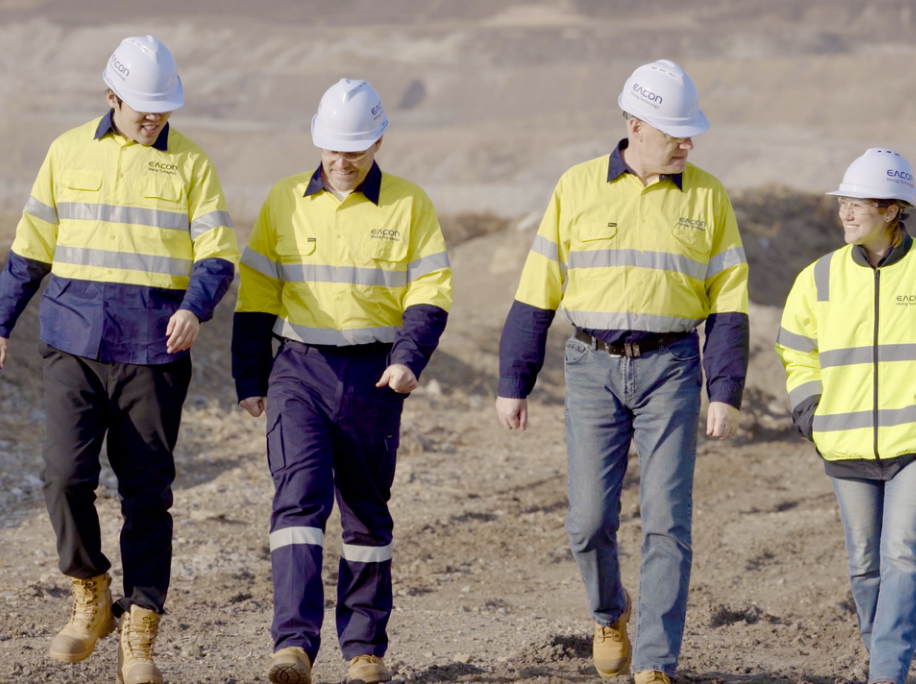
This myth is the one you hear most often, and it carries strong emotional weight, especially for haul truck operators. The belief that autonomy removes jobs is common, yet real-world evidence tells a different story. Mines in Australia, North America, and Chile consistently commit to ensuring that no permanent employee will lose their job solely because of automation. Instead, workers move into new roles in maintenance, control rooms, data analysis or training. Traditional driving roles are reduced, but opportunities grow in technical, analytical and supervisory work within remote operations centres and planning teams.
For many operators, the job shifts from heavy, shift-based hauling to safer screen-based monitoring and problem solving. People in less secure or lower-paid roles understandably feel the fear of job loss most strongly, which is why open communication and genuine retraining programmes are essential.
The reality is that autonomy changes the pattern of work.
Myth 2. Autonomous Haulage is Too Expensive
Fact: The investment leads to significant long-term cost savings.
The upfront cost is often misunderstood as the total cost of ownership. While initial setup can involve investment, modern autonomy delivers long-term financial benefits that far outweigh the starting costs. Autonomous systems reduce operational expenditure through lower fuel consumption, consistent driving behaviour, reduced maintenance costs and fewer collisions, fewer safety incidents reducing downtime, higher productivity with trucks operating 24/7 at steady performance, and reduced labour logistics such as transporting operators to remote sites. Retrofit solutions allow mines to automate existing fleets without purchasing new trucks, making autonomy accessible to a wider range of operations. Last year, Rio Tinto reported that automated trucks operated an extra 1,000 hours and cost 15% less to run than conventional trucks, and that the retrofit to unmanned haulage was central to improving the productivity of its iron ore. At EACON, our smart dispatch, route optimisation and reduced idling deliver higher efficiency than manual driving, as outlined in the 2024 Sustainability Report. Each autonomous truck can operate at up to 110% of human-driven efficiency. Retrofit adoption strengthens this even further by enabling mines to automate their existing fleets without the need for replacement.
Myth 3. Autonomy Does Not Work in Real Mining Conditions
Fact: Modern AHS is built specifically for real-world complexity.
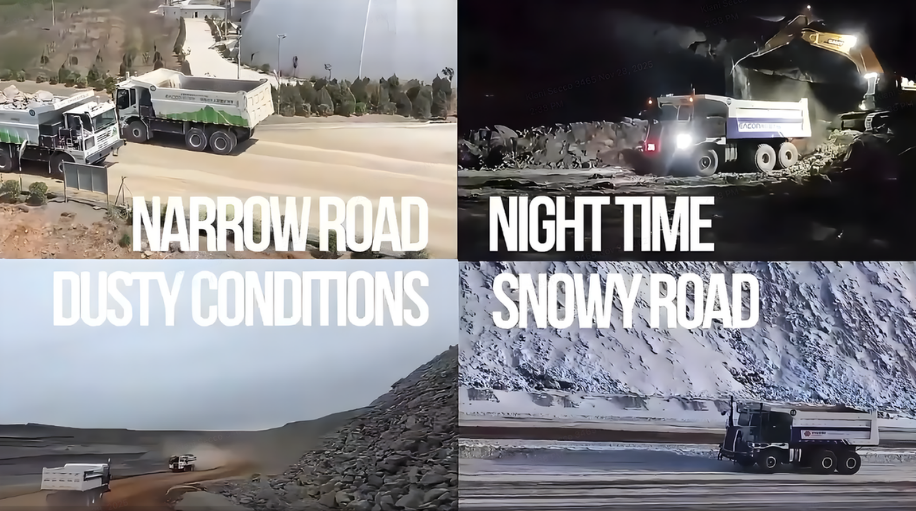
Modern autonomous haulage systems are built for real-world complexity. Dust, fog, heavy rain, snow, uneven haul roads and unpredictable terrain are part of daily mining operations, and contemporary autonomy is engineered to manage all of it. These systems operate reliably across a wide range of weather and visibility conditions, adjust driving behaviour as haul roads degrade, maintain steady production during challenging shifts and detect hazards faster and more accurately than human drivers.
At EACON, our 360º perception system gives each truck a complete view of its surroundings. ORCASTRA® uses continuous sensor coverage to recognise equipment, terrain changes and other hazards while tracking their movement. With V2V communication, the system maintains strong situational awareness even when visibility is poor. This allows the truck to identify real obstacles, adjust speed and spacing when required, and continue the haul cycle smoothly and safely. ORCASTRA has also proven its reliability at high altitude through snow and extreme terrain.
Global deployments across diverse commodities, climates and geographies confirm that autonomous haulage performs consistently in real mining environments and is well beyond controlled scenarios.
Myth 4. Manual Operations Are Safer
Fact: Autonomy significantly reduces risk and improves safety outcomes.
This belief that manual mining operations are safer persists because many people trust human judgement more than machine control. However, the experience of major operators shows that autonomous haulage reduces exposure to hazardous environments and lowers the likelihood of serious incidents. When people are removed from haul roads, loading areas and high traffic zones, many of the most common high-energy risks disappear. Fatigue, distraction and inconsistent driving behaviour are also removed from daily operations.
BHP reports that its autonomous haul trucks at Jimblebar have reduced the potential for vehicle-related incidents and improved overall fleet performance. Rio Tinto states that autonomy improves safety because drivers are no longer positioned in hazardous environments. Roy Hill’s large-scale adoption of autonomous haulage has improved both safety and productivity outcomes.
At EACON, we have operated for over six years without any safety incidents involving autonomous trucks, although this depends on strong training, safeguards and site controls. The situation at BHP's Escondida Copper Mine in Chile shows that autonomy still requires disciplined processes to prevent accidents.
Autonomous haulage does not eliminate all risk, but it reshapes it in a positive way. With the right procedures and workforce readiness, mines report fewer serious injuries, fewer high-potential events and a more controlled and predictable operating environment.
Myth 5: Only Large Mines Can Use Autonomy
Fact: Scalable solutions make autonomy accessible to a wide range of mine sizes.
Autonomous haulage is often seen as a technology reserved for very large mines with extensive fleets and heavy capital budgets. In reality, autonomy is now accessible to a wide range of operations due to modern systems becoming modular, scalable and able to be fitted to existing trucks without major redesign. Flexible architectures and retrofit capability mean mines do not need complex site-wide changes, large infrastructure projects or new OEM-specific fleets to begin their automation journey. This breaks the long-held assumption that autonomy is only for tier one producers.
Thiess has demonstrated this shift at Pembroke Resources’ Olive Downs Complex, where it has deployed 21 autonomous trucks. The project shows that smaller and mid-tier mines can implement autonomy at a scale aligned to their budget, fleet profile and production goals.
At EACON, our focus on retrofit adoptions and scalable system design reinforces this direction by enabling mines to bring autonomy into their existing fleet. This approach makes automation attainable for operations seeking safety and productivity improvements without purchasing new assets.
Autonomy is no longer determined by mine size. With systems built to adapt, mines of different scales can introduce autonomous haulage and realise meaningful gains in performance, consistency and onsite safety.
Myth 6. Autonomy Cannot Work With Mixed Fleets
Fact: OEM-agnostic autonomy is now the new industry standard.
Mixed fleets are the reality of modern mining. A single site may operate trucks from different OEMs, multiple truck models, and a combination of manned and unmanned trucks in the same pit. Modern autonomous haulage systems are designed specifically for this environment to support both mixed fleets and mixed operations. By retrofitting trucks with autonomy sensors, control hardware and on-board computing, mines can create an autonomous haul truck solution that is interoperable and scalable regardless of manufacturer.
At one of Roy Hill's mines, a mix of Caterpillar and Hitachi autonomous haul trucks operate within a dedicated autonomous operating zone.
At EACON, the ORCASTRA® platform is designed for this mixed fleet reality. It can be factory-fitted with OEM partners or retrofitted to any existing truck regardless of OEM, model or payload class. ORCASTRA combines high-precision map data, real-time perception, and predicted object behaviour to support accurate navigation and path planning. This enables autonomous and conventional trucks to operate within the same mining system, and interact safely with other equipment at intersections, waste dumps and load areas. This capability shows that mixed OEM fleets and surrounding manned equipment can coexist safely when supported by defined controls.
Mixed fleets are not a blocker to autonomy. They reflect everyday mining practice, and modern autonomous haulage systems are built to operate reliably within that complexity.
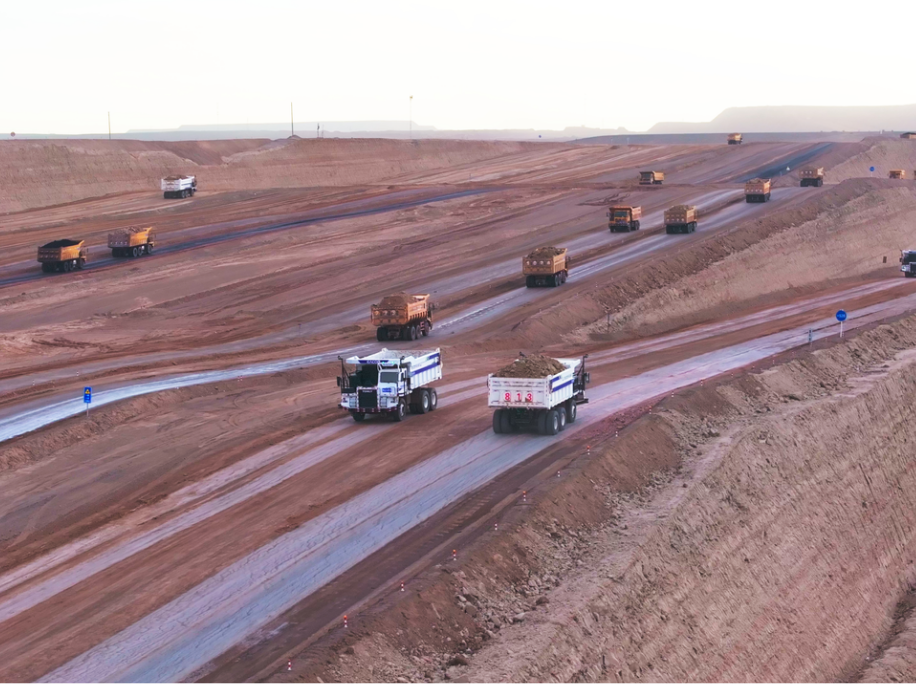
Most myths about autonomy come from hesitation, not evidence. Real operations show clear benefits: safer conditions, more stable output and new technical roles for workers.
As systems prove themselves across diverse climates and fleet types, autonomy is no longer a future concept, it is a dependable part of modern mining ready for sites prepared to take the next step.
Share this page