

Inside the Shift to Fully Driverless Autonomous Haulage in China
In June 2022, a major milestone in the autonomous mining industry was achieved at a coal mine in northwest China.
At the Zhundong Open‑Pit Coal Mine, a fleet of autonomous haul trucks commenced round-the-clock autonomous operation without safety drivers in the cab, transporting material continuously across one of the largest mining operations in the region. For the first time in the industry, real-time unmanned operation with multiple vehicles was achieved.
Behind this milestone was an Autonomous Haulage System (AHS) deployed by EACON Mining Technology for CHN Energy, one of the world’s largest energy companies.
The Difficulty With Removing Safety Drivers
The Zhundong mine, operated by CHN Energy, was designed for massive output with a rated production capacity of 35 million tonnes per year. Operations at this scale require highly efficient material movement systems capable of hauling vast volumes of material every day.
Increasingly, large mines are turning to autonomous haulage systems to achieve the consistency, safety, and operational efficiency required for continuous production.
While autonomous haulage is already widely used across the global mining industry, the transition from supervised autonomy to fully driverless operation remains one of the most complex milestones. At Zhundong, that challenge was compounded by demanding operating conditions, including:
Extreme winter temperatures as low as −40°C
Surface temperatures reaching 60°C in summer
Continuous 24/7 production schedules
Loaded trucks hauling uphill
Large-scale multi-vehicle fleet coordination
Achieving reliable driverless operation in these conditions required far more than simply installing autonomy software. It required system-level engineering across the entire haulage ecosystem.
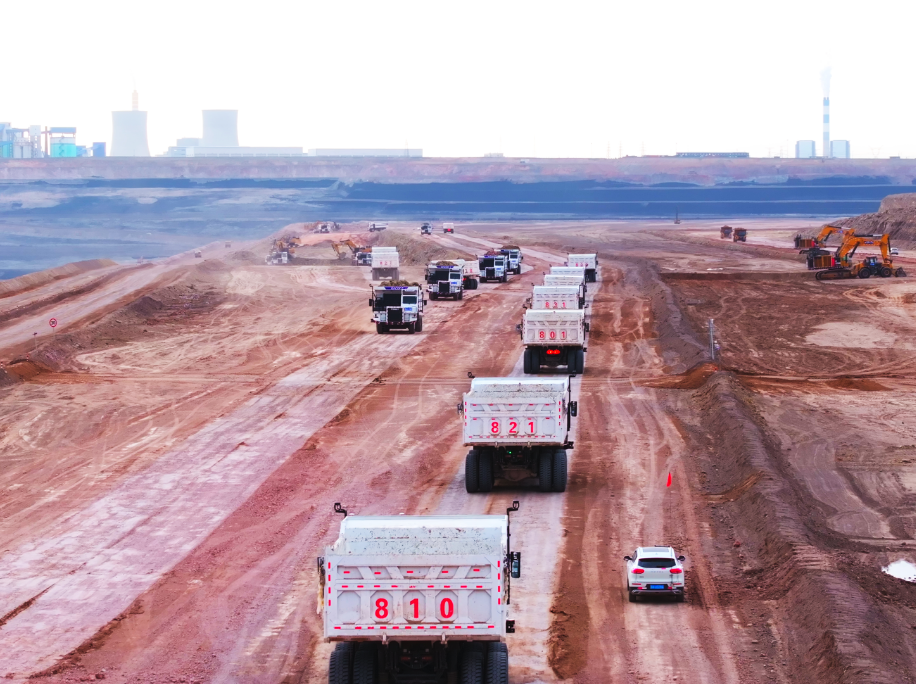
Engineering Safety from the Ground Up
Before deploying autonomous trucks, engineers from EACON and CHN Energy conducted an extensive analysis of operational risks across the mine. More than 500 potential risk sources were identified across 5 major categories: haul roads, loading and unloading areas, vehicles, weather, and communication conditions.
This process allowed the teams to systematically identify and address scenarios that could impact autonomous operation, from reduced visibility to network interruptions. Based on this analysis, multiple layers of safety redundancy were implemented across the autonomous solution, including:
advanced vehicle perception systems
fleet dispatch and coordination platforms
autonomous vehicle control systems
routine inspection procedures
preventive maintenance systems
fault diagnosis systems
Together, these layers created a robust framework capable of supporting continuous driverless operation in a dynamic mining environment.
Scaling the Autonomous Fleet
The project officially began in July 2020, when EACON launched its first commercial autonomous haulage project at the Zhundong mine. Initially deploying 6 autonomous haulage trucks, the early stages focused on system validation, operational learning, and gradual fleet expansion.
Over the following two years, the autonomous system was progressively refined and scaled as an additional 6 vehicles were integrated into the operation.
In June 2022, the project reached its defining milestone when autonomous haulage operations transitioned to normalised driverless production, removing safety drivers from the cab. Since then, the autonomous fleet has continued operating 24 hours per day, 365 days per year, with no safety drivers onboard, achieving more than 2,000 days of reliable and safe operation.
In early 2026, the operation entered a new phase of scale with the deployment of 120 additional battery-electric mining trucks equipped with EACON’s autonomous haulage system, significantly expanding the driverless fleet and further supporting the mine’s transition toward intelligent and low-carbon operations.
The project also marked several national industry firsts:
First multi-vehicle autonomous fleet operating without onboard safety personnel
First continuous 24-hour driverless haulage operation
First project in the region to adopt an advanced 5G architecture featuring standalone deployment, local traffic breakout, and multi-band networking in the industrial field.
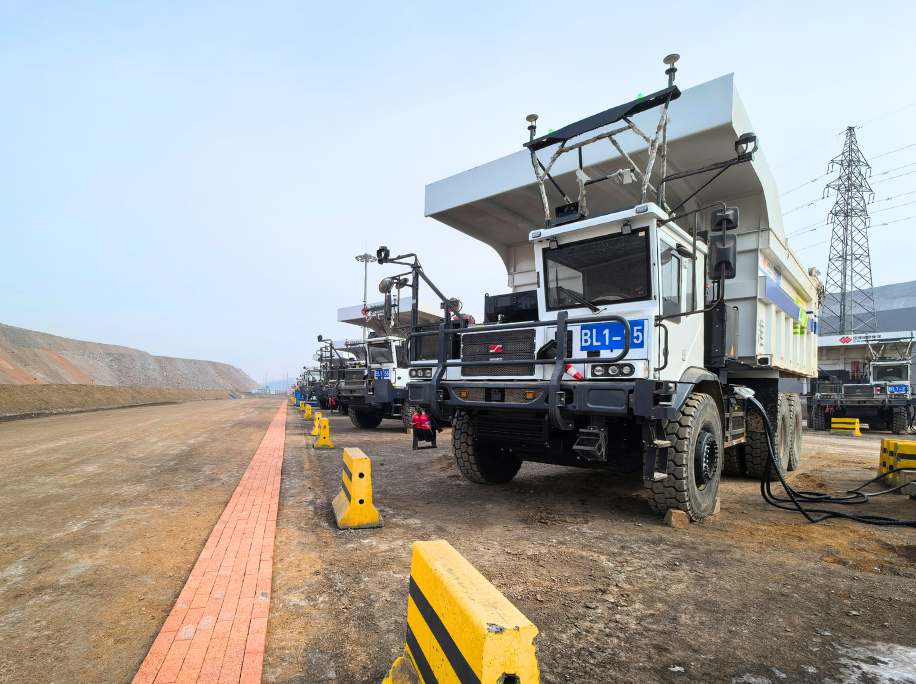
Impact on Mining Automation
For EACON, the Zhundong project represented more than a technical milestone. As the company’s first commercial autonomous haulage deployment, it became the foundation for how its autonomous systems would be designed, validated, and scaled.
Several key lessons emerged during the early stages of the project.
Autonomy must be engineered for real mine environments: Extreme temperatures, changing terrain conditions, and communication reliability all influence the performance of autonomous fleets. Systems must be designed to operate safely under these real-world constraints.
Risk identification is essential before removing safety drivers: The identification of hundreds of potential operational risks allowed engineers to design layered safety redundancies across the autonomous system before transitioning to fully driverless production.
Operational learning is iterative and cumulative: As EACON’s first deployment, the team learned through progressive testing, fleet integration, and problem-solving over time. Success wasn’t instant; it came from iteratively refining systems, processes, and procedures.
The experience gained through the Zhundong deployment also laid the foundation for the exploration of standard wireless communication network architecture for autonomous haulage, and established the operational and engineering foundations that would guide EACON’s future autonomous mining projects.
The Future of Autonomous Mining
As autonomous haulage continues to expand globally, mining companies are increasingly deploying autonomous fleets as part of large-scale production operations. By July 2025, more than 3,800 autonomous haul trucks were operating at surface mines worldwide, reflecting the rapid adoption of the technology across the industry.
Projects like the Zhundong deployment highlight an important next step in this evolution: achieving sustained driverless operation in complex mining environments. By operating continuously without onboard drivers, autonomous fleets can support safer and more consistent production while reducing operator exposure to high-risk environments.
As mines continue to pursue greater efficiency, safety, and lower emissions, autonomous haulage systems are expected to play an increasingly central role in the future of mining operations.
Share this page