

Deploying 16 Autonomous BEV Trucks into 24/7 Production at an Operating Iron Ore Mine
How EACON Mining Technology, Shougang Group and Yutong deployed 16 autonomous BEV trucks at an operating iron ore mine.
At a Glance
16 autonomous battery-electric haul trucks deployed
From infrastructure-ready to 24/7 production in less than one month
Trucks powered by solar-generated electricity
4% utilisation gain after commissioning
Zero tailpipe emissions and reduced workforce exposure
Background
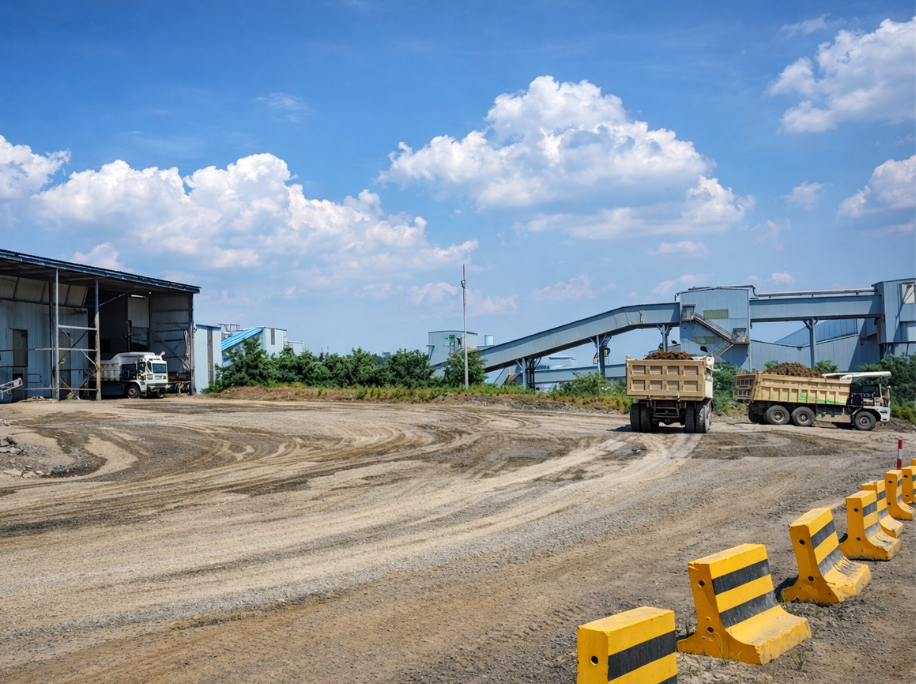
In 2025, EACON Mining Technology, Shougang Group, and Yutong deployed 16 autonomous battery-electric vehicles (BEVs) into operations at the Dashihe Iron Ore Mine in north China. Production could not be paused, and the site required a solution that could be implemented at full operational scale. The objective was clear: replace traditional diesel haulage with a zero-emission, fully autonomous alternative without disrupting daily mining activities. This project demonstrated a rapid transition from infrastructure completion to full-cycle autonomous BEV production in less than one month at an operating iron ore mine, with trucks powered by solar-generated electricity.
The Challenge
Traditional diesel haulage presented a combination of operational and environmental pressures. The mine sought to reduce emissions and fuel consumption while maintaining productivity across a complex operating environment. The site featured haul roads as narrow as 14 metres, long haul distances, and significant elevation changes. These conditions required precise vehicle control and well-coordinated fleet operations, while also creating opportunities for BEVs to recover energy through regenerative braking on downhill segments. At the same time, the mine needed to introduce autonomy and electrification gradually into an active mixed-fleet production environment while progressing toward site-wide battery-electric operations. The solution had to integrate with existing workflows, support continuous production, and scale across the fleet from day one. The mine needed to:
Replace diesel haulage with autonomous battery-electric vehicles.
Deploy autonomy at full operational scale across an operating mine.
Integrate BEVs into existing mine workflows and infrastructure.
Navigate narrow haul roads, long haul distances, and significant gradients while maintaining operational efficiency.
Support decarbonisation without compromising productivity.
The Approach
EACON implemented its Autonomous Haulage System (AHS) at the mine through an accelerated, phased deployment.
1. Autonomy-Ready Infrastructure
Before autonomous operations commenced, the project established the digital infrastructure required to support fleet-wide autonomous coordination and continuous 24/7 operations. This enabled the autonomous battery-electric fleet to operate within the mine's existing production environment while supporting rapid deployment at operational scale.
2. Vehicle Intelligence
Each Yutong battery-electric truck was fitted with EACON's ORCASTRA® autonomous solution, combining multi-sensor perception (LiDAR, radar, and cameras) with onboard AI for automated dispatch, dynamic decision-making, and terrain-aware navigation.
3. Fleet Coordination
EACON's ORCASTRA® CONDUCTOR platform coordinated autonomous haulage activities across loading, hauling, dumping and charging operations to support stable, continuous production. The system managed fleet dispatch and charging schedules to balance production requirements with battery availability, enabling the 16-truck fleet to operate in full-cycle autonomous production without safety drivers while maintaining integration with existing mine workflows. During commissioning, the team continuously optimised vehicle control, path planning, and fleet coordination functions to improve autonomous performance in the live production environment. As system capabilities matured, manual intervention events were reduced from 96 per day to fewer than one intervention per truck per day on average, helping stabilise mixed autonomous operations and support reliable 24/7 production.
4. Energy Integration
The battery-electric configuration was integrated with the mine's solar energy supply, supporting lower-emission mining operations and reducing reliance on fossil energy sources. The mine's steep downhill loaded hauls also enabled regenerative braking, recovering approximately 5% of energy per loaded cycle and feeding it back into the battery system to reduce charging demand.Because the autonomous fleet, battery-electric platform and supporting infrastructure were deployed together from the outset, the system progressed from infrastructure completion to full-cycle 24/7 autonomous production in less than one month.
 (1).png "Untitled (916 x 684 px) (1).png")
The Results
Rapid BEV deployment: From infrastructure completion to full-cycle autonomous BEV production in less than one month.
Higher utilisation: Truck utilisation improved by 4%, driven by continuous 24/7 autonomous cycles that removed shift variability and manual bottlenecks.
Energy efficiency gains: Regenerative braking recovered approximately 5% of energy per loaded haul, reducing draw on the charging system.
Renewable energy integration: Solar power offsets fossil electricity use for charging, supporting lower carbon intensity operations.
Safer operations: Workforce exposure to active haul roads was significantly reduced, with fewer operator interactions required.
Zero tailpipe emissions: Full transition to battery electric haulage eliminated diesel combustion emissions at the haulage point.
This project showed that an operating mine can transition from diesel manual haulage to autonomous, battery-electric haulage quickly, at full scale, and without production pauses. It also demonstrated how combining electrification with autonomy delivers both operational and environmental gains in complex metal mine conditions.
A Model for Scalable Deployment
The deployment at the Dashihe Iron Ore Mine forms part of a broader autonomous haulage rollout across Shougang's mining operations. Building on earlier deployments, Shougang has expanded its autonomous battery-electric haulage operations to 43 autonomous trucks operating across multiple mine sites. This deployment demonstrates that autonomous battery-electric haulage can be integrated into active mining operations at full production scale while supporting productivity, safety, and decarbonisation objectives. The continued expansion of autonomous BEV haulage across Shougang's operations highlights the potential for this operating model to be adopted more broadly across the mining industry.
Share this page