

The Next Generation of Autonomous Mining: Smarter Trucks, Lower Costs and AI
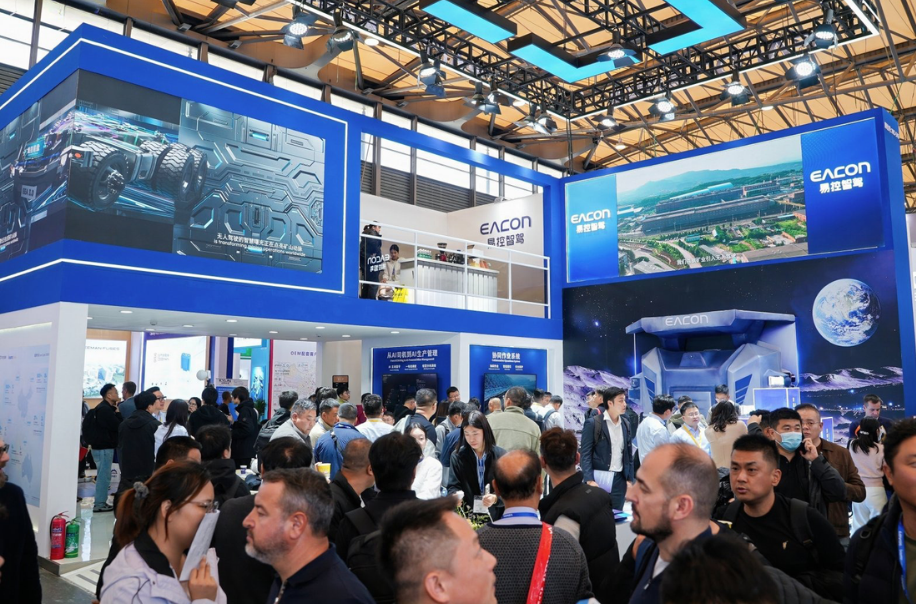
From more adaptable autonomous operations to lower lifecycle costs and mine-wide AI, EACON's latest technology developments focus on making autonomous haulage more accessible, efficient and scalable across diverse mining environments.
Autonomous mining has reached an important stage in its development. The industry has established the ability to operate autonomous mining trucks at scale; the next challenge is to make the technology easier to deploy, more adaptable to different site conditions and increasingly cost-effective over the long term.
At bauma CHINA 2026, EACON introduced a series of technology developments addressing these priorities, including significant upgrades to its ORCASTRA® autonomous haulage platform and the showcase of its mining AI agent.
Drawing on operational experience from more than 4,000 autonomous mining trucks and over 200 million kilometres of operation, these developments reflect a broader shift in autonomous haulage: from proving that vehicles can operate without drivers to improving how effectively they perform in real mining environments.
Advancing Autonomous Haulage Across Five Key Areas
One of the key barriers to wider autonomous haulage adoption is adapting the technology to the varied conditions of mining operations. Narrow loading areas, confined crusher pockets, changing working faces, and limited network infrastructure can create additional complexity when introducing autonomous vehicles.
EACON's latest ORCASTRA® upgrades address these challenges across five key areas: operational flexibility, site adaptability, deployment efficiency, network resilience and cost-effectiveness.
Greater operational flexibility: Improvements to multi-vehicle interaction and decision-making allow autonomous trucks to navigate complex traffic environments more smoothly, reducing remote driving by 60% and traffic congestion by 30%.
Greater site adaptability: Enhanced path planning and vehicle control enable 90-tonne wide-body autonomous trucks to perform multiple reversing manoeuvres and spotting procedures within loading areas as narrow as 12 metres. This allows autonomous haulage to be introduced into mining areas with limited space, without requiring significant site reconstruction.
Faster deployment: Powered by EACON's mining world model simulation platform, new truck models can be adapted for autonomous operation in approximately two weeks. With EACON's one-stop deployment toolchain, on-site static calibration takes as little as 10 minutes per truck, without requiring a dedicated calibration pad. These improvements allow the overall on-site deployment cycle to be shortened to one to three days, significantly reducing on-site labour and time costs.
Improved network resilience: ORCASTRA® strengthens onboard autonomous decision-making, reducing reliance on real-time cloud connectivity and costly 5G private networks. Through improved onboard intelligence, it supports reliable operation in 4G network environments and local network-free scenarios, including demonstrated autonomous passage through 400-metre tunnels without satellite positioning or network signals.
Greater cost-effectiveness: A centralised electrical and electronic architecture reduces the number of components by 20% and improves system reliability by 50%. Meanwhile, smoother autonomous driving reduces high-wear operations such as sudden braking, helping minimise mechanical wear and extend vehicle service life. Together, these improvements contribute to lower whole-vehicle lifecycle costs.
Together, these five improvements aim to lower the infrastructure, site preparation, deployment and operational barriers associated with introducing autonomous haulage across different mining environments.
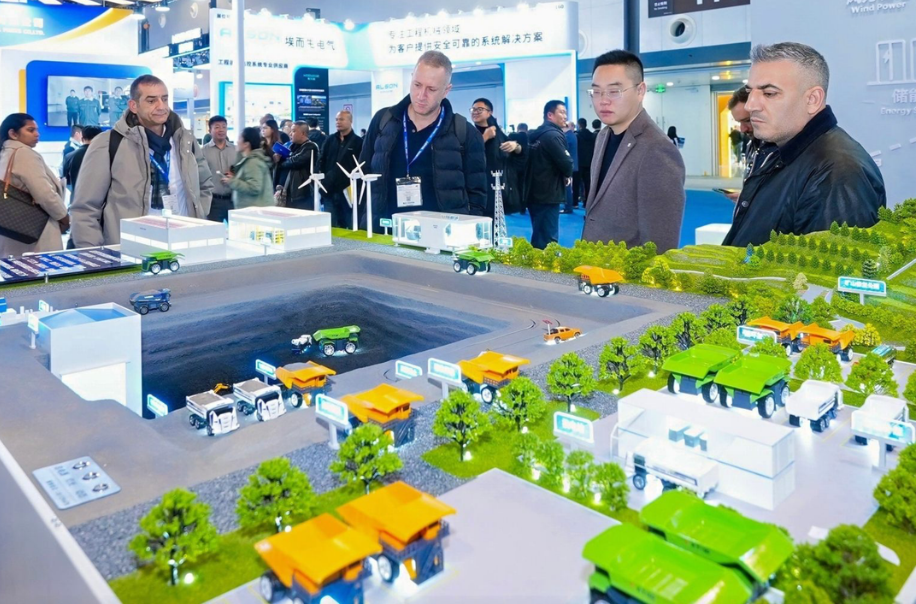
From Single-Vehicle Intelligence to Mine-Wide AI
The next stage of this evolution is moving from single-vehicle intelligence to mine-wide coordination, where autonomous trucks, equipment, personnel and production management systems work together through coordinated decision-making.
As autonomous fleets grow, managing increasingly complex mining operations becomes another important consideration.
Traditional production scheduling often involves controllers monitoring multiple systems, identifying operational issues, coordinating resources and managing responses manually. As operations expand, these processes can become increasingly time-consuming.
At bauma CHINA 2026, EACON launched its new mining AI agent, designed to extend intelligence beyond individual vehicles and into mine-wide production management.
By connecting to operational information from mining trucks, auxiliary equipment, roads, energy resources and personnel, the AI agent is designed to proactively identify anomalies, assess potential impacts, dispatch resources and track tasks through to completion within authorised parameters. Routine tasks, such as sending low-battery trucks to charge, can be handled automatically within authorised limits, while more complex situations are pushed directly to the relevant personnel or equipment.
It also supports natural language interaction by voice or text, allowing controllers to query operational information, issue scheduling instructions and access production analysis more efficiently.
Advancing Purpose-Built Autonomous Mining Trucks
Alongside its technology developments, EACON announced further progress in its OEM collaborations at bauma CHINA 2026.
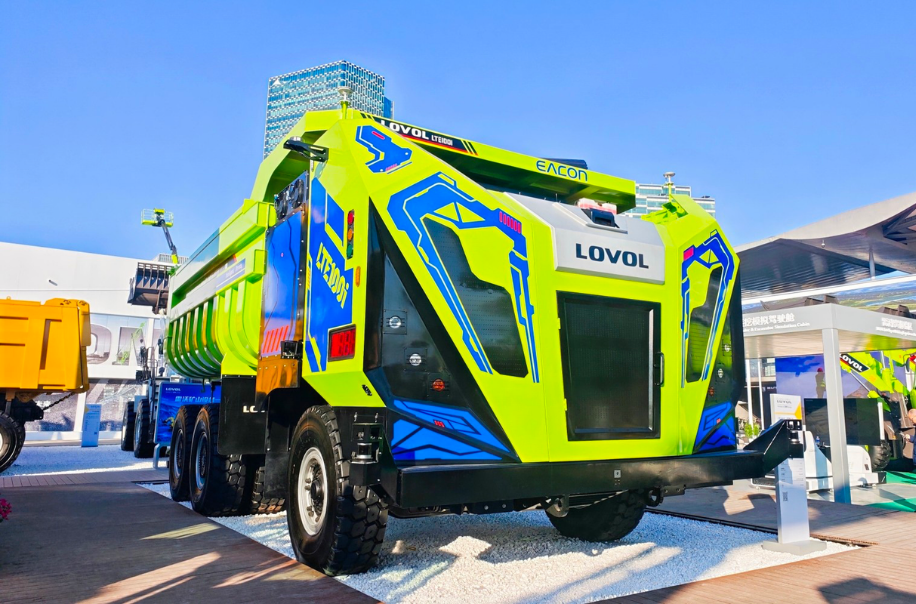
A highlight was the debut of the LTE100i, a cab-less, autonomous mining truck jointly developed with Lovol. Designed from the outset for autonomous operation, the vehicle represents another step towards purpose-built autonomous mining trucks.
EACON also signed a strategic cooperation agreement with XCMG Group to advance the development of next-generation autonomous mining trucks, and significantly scale up their current fleet deployments.
For EACON, purpose-built design is not a one-off concept, but an ongoing capability built through collaboration with partners including Tonly and NHL, supporting the development of autonomous solutions across different vehicle platforms and configurations.
Shaping the Future of Autonomous Haulage
The next phase of autonomous haulage will be defined not only by how many trucks can operate autonomously, but by how effectively the technology can adapt to different site conditions, reduce operating costs and support increasingly complex mining operations. Lowering the threshold for introducing autonomous haulage will be essential to expanding its application across different types of mines worldwide.
EACON's latest developments reflect this evolution, with a focus on making autonomous haulage easier to introduce, more resilient in challenging environments and more efficient over the life of an operation.
As the industry continues to evolve, these capabilities will play an important role in expanding autonomous haulage across a wider range of mining operations worldwide.
Share this page